 +353 (0)1 4523432




Energy-Efficient Refrigerated Circulators:
Eco-Friendly Laboratory Equipment for Lower Operating Costs
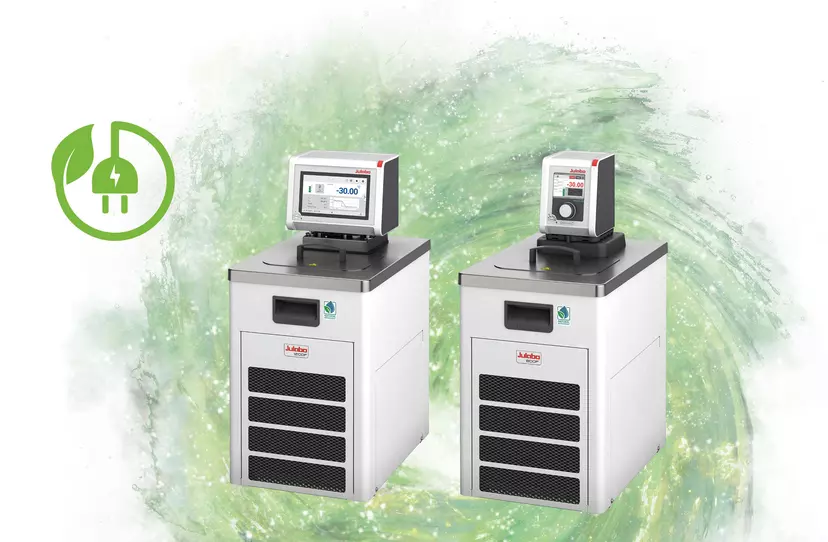
Refrigerated circulators play a vital role in delivering precise and reliable temperature control for samples, test specimens, and processes in basic research, materials testing, and technical applications. For many of these uses, operating at partial load is sufficient to withdraw heat efficiently. Energy-efficient refrigerated circulators help users cut operating costs while reducing environmental impact, making them ideal as eco-friendly laboratory equipment.
When purchasing new lab instruments, it's essential to assess the intended operating conditions to estimate potential energy savings.
Energy Efficiency in Laboratory Circulators with Speed-Controlled Compressors
What does energy efficiency mean?
In simple terms, energy efficiency is about achieving a goal—here, accurate temperature control—using the least amount of energy. A more energy-efficient product performs the same function as a conventional one but consumes less power. Comparable products serve as useful benchmarks.
When is energy-efficient equipment beneficial?
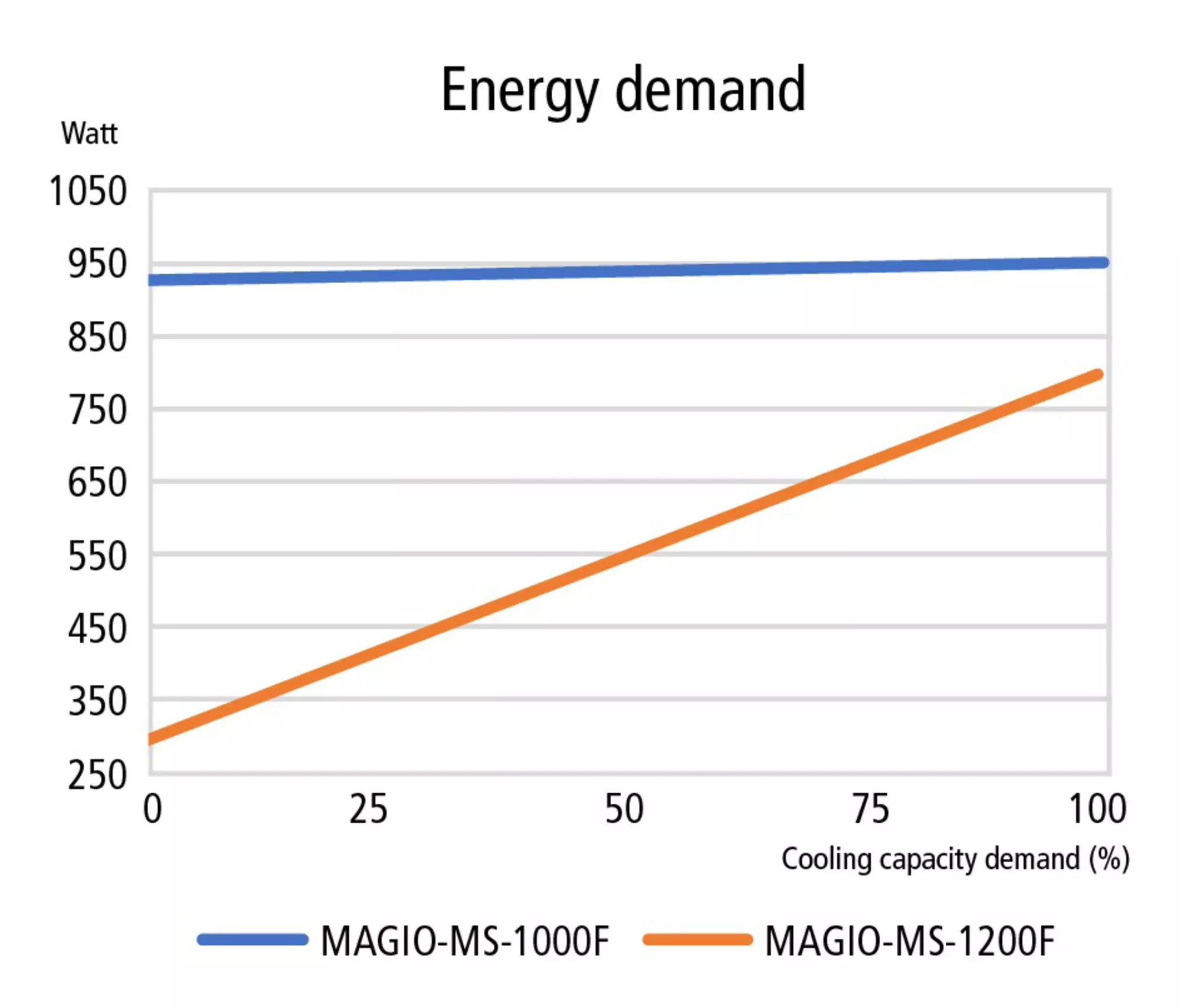
In nearly all temperature control systems, there are two components of energy consumption: base load and usage-dependent load. Base load is the energy needed to run the system, while usage-dependent energy varies with application-specific factors such as cooling capacity, ambient temperature, and the number of connected devices. Greater energy efficiency is achieved when the usage-dependent portion is significant.
Many common applications use a fixed setpoint, reached quickly with all components running at full capacity. Once reached, the system merely maintains the temperature, requiring only partial operation of components like compressors or fans. In such scenarios, using energy-efficient refrigerated circulators can result in energy savings of up to 70%.
Circulators with cooling capacities below 500 watts are typically built as capillary tube systems. Due to their low cooling output, they naturally consume less power. Adding features like electronic expansion valves or speed-controlled components would raise costs, while offering limited additional savings.
JULABO has long incorporated electronic expansion valves in units with 600-watt capacity or higher. Now, with the introduction of the 800F and 1200F models, JULABO integrates speed-controlled compressors and fans, delivering enhanced energy savings. These are the first systems in their performance range to offer such capabilities.
Example: Energy Savings in Practice
Let’s compare the MAGIO MS-1200F and MAGIO MS-1000F. The MS-1000F includes an electronic expansion valve, while the MS-1200F also has a speed-controlled fan and compressor.
Operating Point A: The system holds a steady bath temperature with no added thermal load—only pump operation is required.
Energy Consumption (in watts)
|
Bath Temperature |
MAGIO MS-1000F |
Circulator |
Cooling Machine |
MAGIO MS-1200F |
Circulator |
Cooling Machine |
|
20°C |
927 |
435 |
492 |
296 |
195 |
101 |
|
0°C |
878 |
375 |
503 |
279 |
175 |
104 |
|
-20°C |
861 |
375 |
486 |
279 |
175 |
104 |
At lower loads, the MS-1200F uses approximately 600 watts less than the MS-1000F.
Operating Point B: The system cools from +20°C to -20°C under full load conditions. The only energy required is for pump operation.
Energy Consumption
|
Temperature Range |
MAGIO MS-1000F |
Circulator |
Cooling Machine |
MAGIO MS-1200F |
Circulator |
Cooling Machine |
|
+20°C to -20°C |
950 |
75 |
875 |
800 |
75 |
725 |
Even at 100% load, the MS-1200F consumes 150 watts less energy than the MS-1000F.
Energy Savings Summary
The amount of energy saved depends on the average cooling capacity required. Lower demands result in greater savings. Since many applications do not operate at full load continuously, typical energy savings range from 40% to 60%.
Return on Investment
For refrigerated circulators of 800 watts or more, the cost of more advanced components is usually recouped in under two years due to energy savings. Let’s revisit the MAGIO MS-1200F and MS-1000F comparison. Assuming partial load use at around 50%, the estimated energy savings is 400 watts per hour. Based on varying electricity prices and usage durations, savings are calculated below:
|
Example |
Electricity Price |
Daily Use |
Annual Use |
Annual Savings |
|
1 |
€0.10 / kWh |
7 hours |
1820 hours |
€73 |
|
2 |
€0.10 / kWh |
24 hours |
6240 hours |
€250 |
|
3 |
€0.20 / kWh |
7 hours |
1820 hours |
€146 |
|
4 |
€0.20 / kWh |
24 hours |
6240 hours |
€499 |
|
5 |
€0.30 / kWh |
7 hours |
1820 hours |
€218 |
|
6 |
€0.30 / kWh |
24 hours |
6240 hours |
€749 |
These figures show that even with low electricity rates, energy-efficient technology can pay off within two years. Additionally, lower power usage supports climate protection.
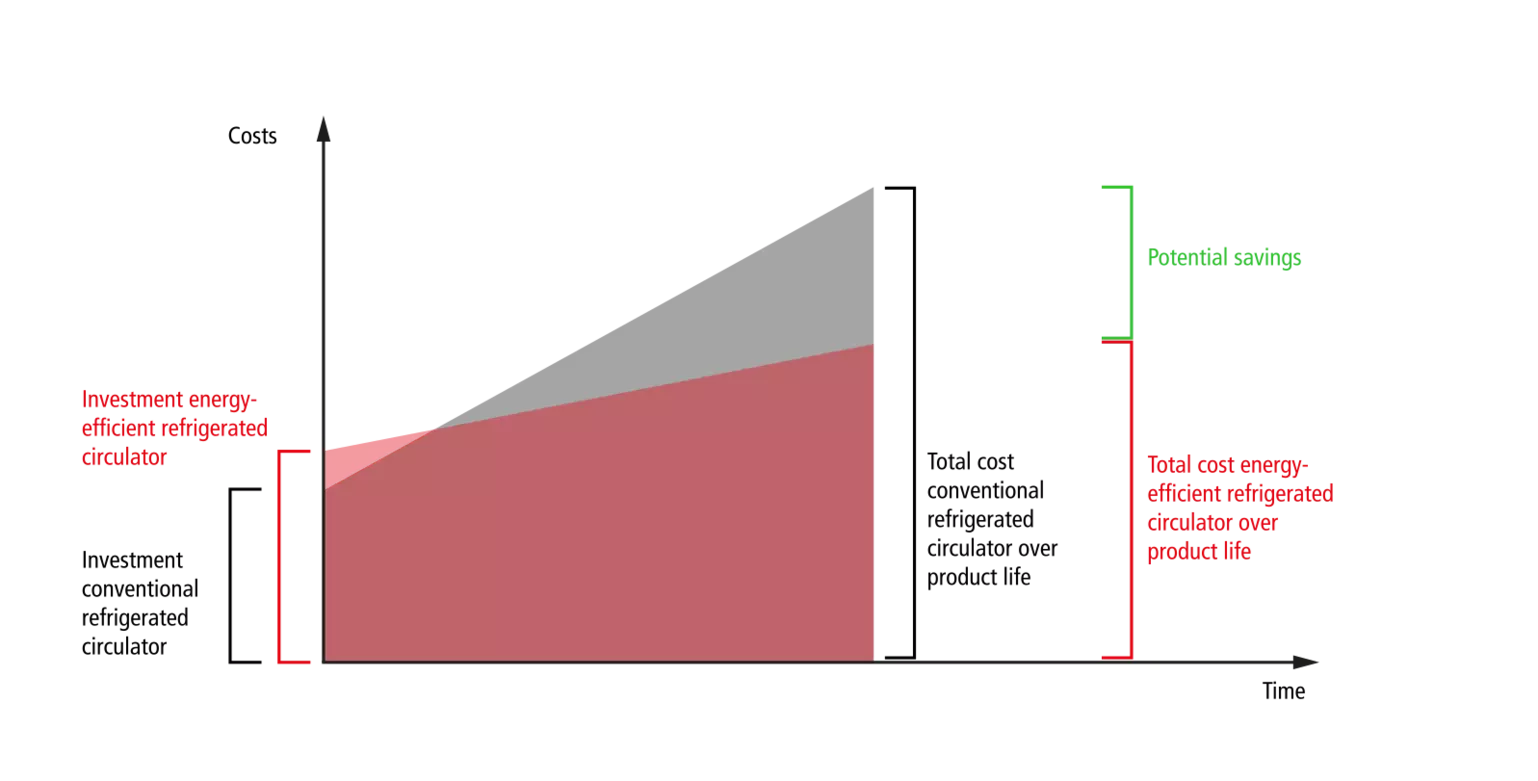
Energy-efficient refrigerated circulators are a smart choice for applications requiring cooling capacity over 800 watts. The initial investment is often recouped within two years thanks to lower electricity usage. By adopting this eco-friendly laboratory equipment, users not only save money but also contribute to a more sustainable future.
If you're considering upgrading your laboratory with eco-friendly equipment or want to explore how JULABO’s advanced temperature control systems can reduce your operating costs, we’re here to help. Contact our expert team today for personalised advice, product recommendations, or a detailed quote tailored to your application needs. Let’s work together to make your lab more efficient and sustainable.
|
To find out more: |